Foundation models have recently emerged as a powerful tool for various applications. However, their impact on mobile applications has been less investigated. Recent research showcases their ability to achieve unprecedented capabilities in areas such as task automation, hand sign detection, and visual question answering.
However, their increasing complexity poses significant challenges in terms of sensor modality, diverse sensor environments, model efficiency, interactivity, and user experience.
The EIFCom workshop aims to provide a forum for researchers, developers, and industry partners to share their experiences, present innovative solutions, and discuss the latest advancements in efficient foundation models for mobile applications.
Call for Papers
Topics of Interest
We solicit papers that present preliminary research in broad areas of mobile foundation models, including but not limited to:
- Efficient Architectures: On-device training and inference, model compression, quantization, and pruning for mobile budgets.
- Green Foundation Models: Techniques, frameworks, and hardware architecture to make foundation models more environmentally friendly.
- Multimodal Systems: Integration of diverse sensors (LIDAR, camera, IMU, audio) with foundation models.
- Interactivity & UX: Latent-aware response, personalized models, and human-centered AI for mobile devices.
- Privacy & Security: Federated learning, on-device privacy-preserving architectures.
- Applications: Innovative use cases in task automation, health monitoring, accessibility, and AR/VR.
Submission Instructions
We invite original research papers that have not been previously published and are not currently under review for publication. All submissions must be provided in PDF format, and follow the formatting guidelines of MobiSys 2026.
- Full papers: No longer than 6 pages including references.
- Position papers: Limited to 4 pages including references.
- Review Process: EIFCom follows a single-blinded review process.
All submissions must use a 10pt font (or larger) and be correctly formatted for printing on letter-sized (8.5" by 11") paper. Paper text blocks must follow ACM guidelines: double-column, with each column 9.25" by 3.33", 0.33" space between columns, and single-spaced. The abstract should contain less than 250 words.
Latex Template
Submissions can use this LaTex template which is known to comply with the formatting requirements. Authors remain responsible for checking that their resulting PDF meets our formatting specifications.
Submission Site
The papers can be submitted at: https://eifcom26.hotcrp.com/
Best Paper Award
All accepted papers will be considered for the best paper award. The final decision will be made at the workshop based on paper’s technical and presentation merits.
If you have any questions, please reach out to the organisers via phamn@cardiff.ac.uk, hong.jia@auckland.ac.nz, or taesik.gong@unist.ac.kr.
Keynote Speakers
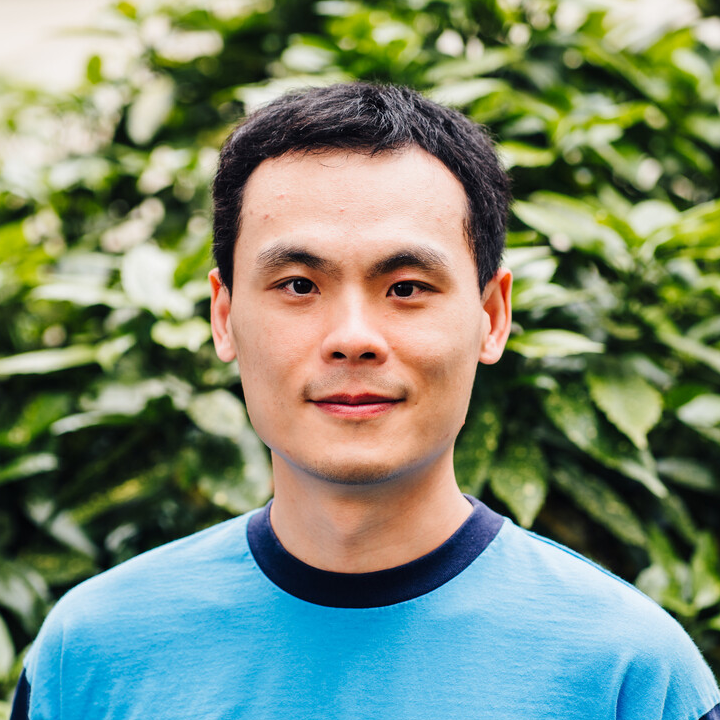
Prof Hongkai Wen
Professor of Computer Science at Warwick University
Prof Wen is a Full Professor at the Department of Computer Science, the University of Warwick, and the Head of the AI/ML Systems (AMS) Division. He is a Fellow of the Alan Turing Institute, the UK’s national institute for data science and AI. At the Turing, he is also an Independent Scientific Advisor for the BridgeAI programme, and a member of the Turing Research Ethics (TREx) team. Previously, he was a Senior Research Scientist at Samsung AI Centre Cambridge, where his team worked on Automated Machine Learning (AutoML) for On-device Intelligence. He did my postdoctoral research with the Cyber-Physical Systems Group in the Department of Computer Science (formerly known as the Computing Laboratory, or Comlab), University of Oxford, and studied Computer Science at Keble College, Oxford.

Dr Kayla-Jade Butkow
CTO & Co-founder at auryx
Dr Kayla-Jade Butkow is the co-founder and CTO of auryx, where they are turning audible sound into health insights using AI, with earbuds as the first step. Building on her research at the University of Cambridge on earbuds as a health monitoring platform, she has been working to bring this technology to market with auryx. She is driven by the intersection of deep tech and human impact - solving challenging engineering problems with the goal of improving everyday health and wellbeing for patients and users.
Tentative Program
The detailed program will be announced after the notification of acceptance.
| 09:00 - 09:10 | Opening Remarks |
| 09:10 - 10:00 | Keynote Session I: Prof Hongkai Wen |
| 10:00 - 10:45 | Technical Session I |
| 10:45 - 11:00 | Coffee Break |
| 11:00 - 11:45 | Keynote Session II: Dr Kayla-Jade Butkow |
| 11:45 - 12:30 | Technical Session II |
| 12:30 - 12:40 | Best Paper Award and Closing |
Important Dates
All deadlines are 23:59 AoE (Anywhere on Earth).
- Paper Submission: April 3, 2026 Add to Calendar
- Acceptance Notification: April 17, 2026
- Camera-Ready Submission: April 24, 2026
- Workshop Date: June 25, 2026
Organization
General Chairs
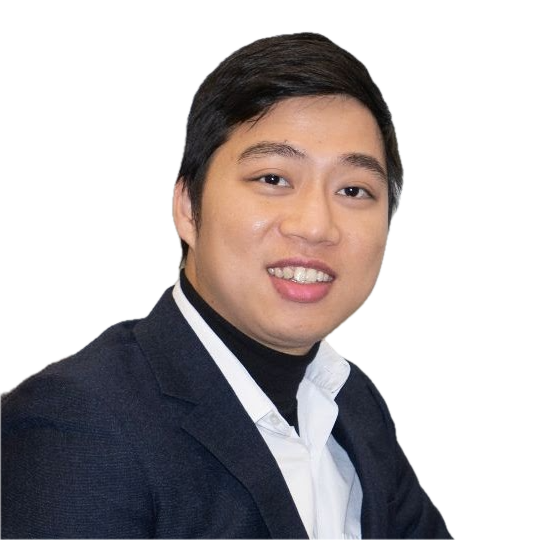
Nhat (Nick) Pham
Cardiff University, UK
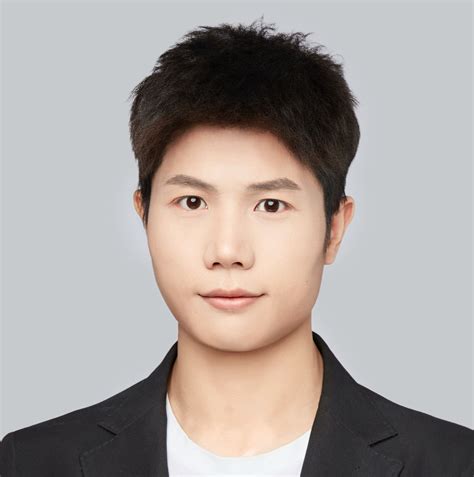
Hong Jia
University of Auckland, NZ
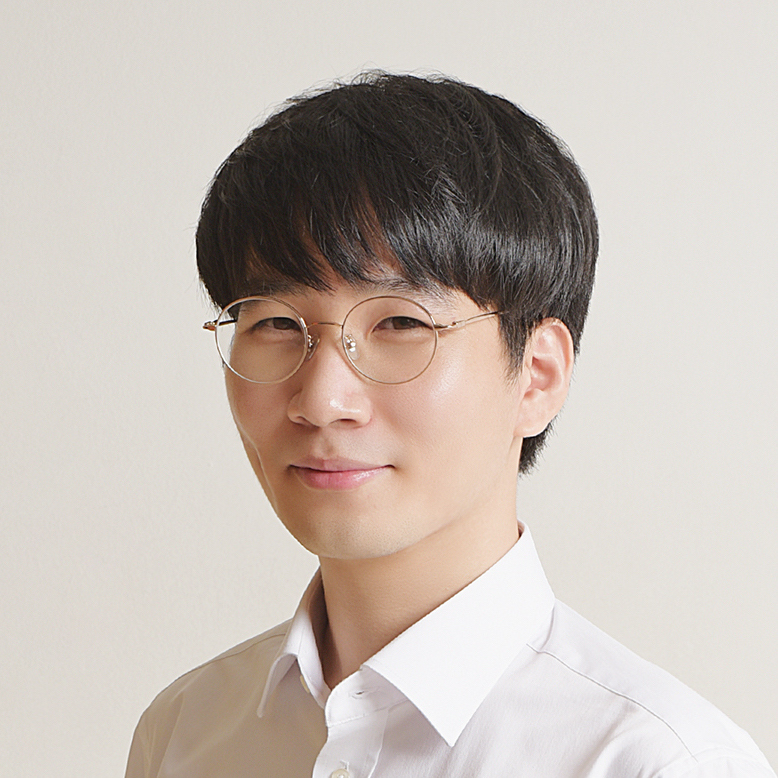
Taesik Gong
UNIST, South Korea
Web Chair
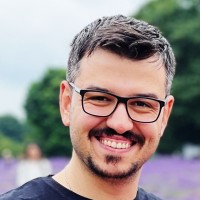
Hakan Kayan
Cardiff University, UK
Social Chair

Le Fang
University of Melbourne, AU

Ahin Lee
UNIST, South Korea
Publication Chair

Qicong Hu
University of Auckland, NZ
Technical Program Committee
- Nam Bui, University of Colorado Denver
- Tao Ni, King Abdullah University of Science and Technology
- Talia Xu, University of Auckland
- Qiang Yang, University of Cambridge
- Yu (Yvonne) Wu, Dartmouth College
- Soumyajit Chatterjee, Brave Software
- Dimitris Spathis, Google Research
- Bo Wei, Newcastle University
- Yan Gao, Flower Labs
- Lingyan Ruan, University of Melbourne
Co-located with ACM MobiSys 2026
Location: William Gates Building, Cambridge University.
Date: Thursday, June 25, 2026.
Sponsors